
Table of Contents
Discovering Vocational Barbering Education for Working Adults
In today’s fast-paced world, many working adults seek fulfilling career paths that build on their life experience without upending their schedules. A technical school for working adults, such as those offering hands-on trade programs, provides the perfect bridge to stable, in-demand professions. With skilled trades like barbering facing growing demand, vocational education empowers mature learners to gain credentials quickly and affordably. Imagine transforming your evenings into steps toward independence–could this be your path to a rewarding trade?
Nestled at 16 West 7200 South in Midvale, Utah 84047, The Barber School stands out among trade schools for adults by blending classroom instruction with real-world practice in its public student barbershop. Open Tuesday through Friday from 10:00 a.m. to 7:00 p.m. and Saturdays from 8:30 a.m. to 4:15 p.m., it accommodates evening schedules for busy professionals. Students hone skills on actual clients, offering low-cost services like haircuts for 7 USD and beard trims for 3 USD. This dual setup not only cuts training costs but also builds confidence through community service.
The Office of Career, Technical, and Adult Education highlights federal backing for such vocational schools for adults, noting that over 8 million working learners enroll annually to upskill amid labor shortages in trades. The Barber School’s barber school programs lead to certification, emphasizing practical techniques and business savvy. Non-discrimination policies ensure inclusivity, with ADA Coordinator Lyndi Keisel at 801-666-4743 providing accommodations for disabilities.
This guide explores vocational barbering fundamentals next, delving into training details, hands-on applications, advanced techniques, common questions, and final takeaways. Whether upgrading skills or pivoting careers, adult-focused technical training programs like this one open doors to barbering success–start your journey today.
Fundamentals of Vocational Barbering for Adults
For working adults seeking a career change without derailing their lives, a technical school for working adults like The Barber School in Midvale, Utah, offers an ideal pathway into the barbering profession. Vocational barbering represents hands-on trade education centered on the barbering arts, equipping mature learners with practical skills for immediate workforce entry. This approach stands out among trade schools for adults by emphasizing efficiency and accessibility, allowing participants to balance jobs and family while building a stable future in a creative field.
The Barber School’s vocational program spans 1000 hours, blending classroom theory with clinic practice to prepare students comprehensively. Adults over 18 with a high school diploma or equivalent can enroll easily, addressing common queries on how to join vocational schools for adults. Classes run Tuesday through Friday from 10 a.m. to 7 p.m. and Saturday from 8:30 a.m. to 4:15 p.m., providing evening and weekend flexibility that suits busy schedules–no full-time commitment or online options needed, just dedicated in-person training. This structure mirrors successful models at places like Francis Tuttle Technology Center, where adult success rates exceed 80 percent in similar short-term programs, underscoring the efficiency of such adult trade education centers.
Vocational paths like barbering appeal to working learners because they deliver quick, targeted skills without the lengthy commitments of traditional education. They prioritize real-world application over abstract theory, enabling faster returns on investment for those juggling responsibilities. The following table highlights these advantages:
Comparison of Vocational Barbering Program Basics vs. Traditional College Paths
This table compares key aspects of vocational barbering at schools like The Barber School with four-year degrees, highlighting time, cost, and outcomes for working adults.
| Aspect | Vocational Barbering | Traditional College |
|---|---|---|
| Duration | 6-12 months | 4+ years |
| Cost | Affordable tuition with low-cost clinic services | $20,000+ annually |
| Hands-On Training | Daily client interactions in student barbershop | Limited practical focus |
| Flexibility for Adults | Evening/weekend options available | Full-time commitment often required |
Drawing from federal vocational reports and The Barber School’s details, this comparison reveals significant time and cost savings. Vocational barbering cuts duration by over 75 percent and expenses by avoiding high annual fees, allowing adults to earn sooner–often within a year–while gaining superior practical experience that boosts employability.
At the heart of the curriculum lie foundational skills essential for professional barbers. Students master techniques through guided practice, ensuring confidence from day one. Key areas include:
- Clipper cuts for precise fades and styles.
- Straight-razor shaves for clean, traditional finishes.
- Sanitation protocols to maintain hygiene standards in busy shops.
These elements, taught in utah barber school classes, prepare graduates for diverse client needs, with motivational guidance that empowers adult learners to thrive.
Support services enhance accessibility for vocational schools for adults. The Barber School offers grievance procedures for fair resolution of concerns and flexible leave policies to accommodate life’s demands. As a non-discriminatory institution, it provides disability accommodations via the ADA coordinator, ensuring reasonable adjustments without vaccination requirements. These features, inspired by efficient models like Francis Tuttle, foster an inclusive environment where mature learner vocational programs succeed.
The low-cost clinic model drives practical training while benefiting the community. Students perform real services at prices from 1 to 7 USD, such as a 5 USD senior haircut, honing skills under supervision. This setup not only reduces program costs but also builds portfolios through genuine interactions, making barbering an attainable trade for adults in Midvale, Utah.
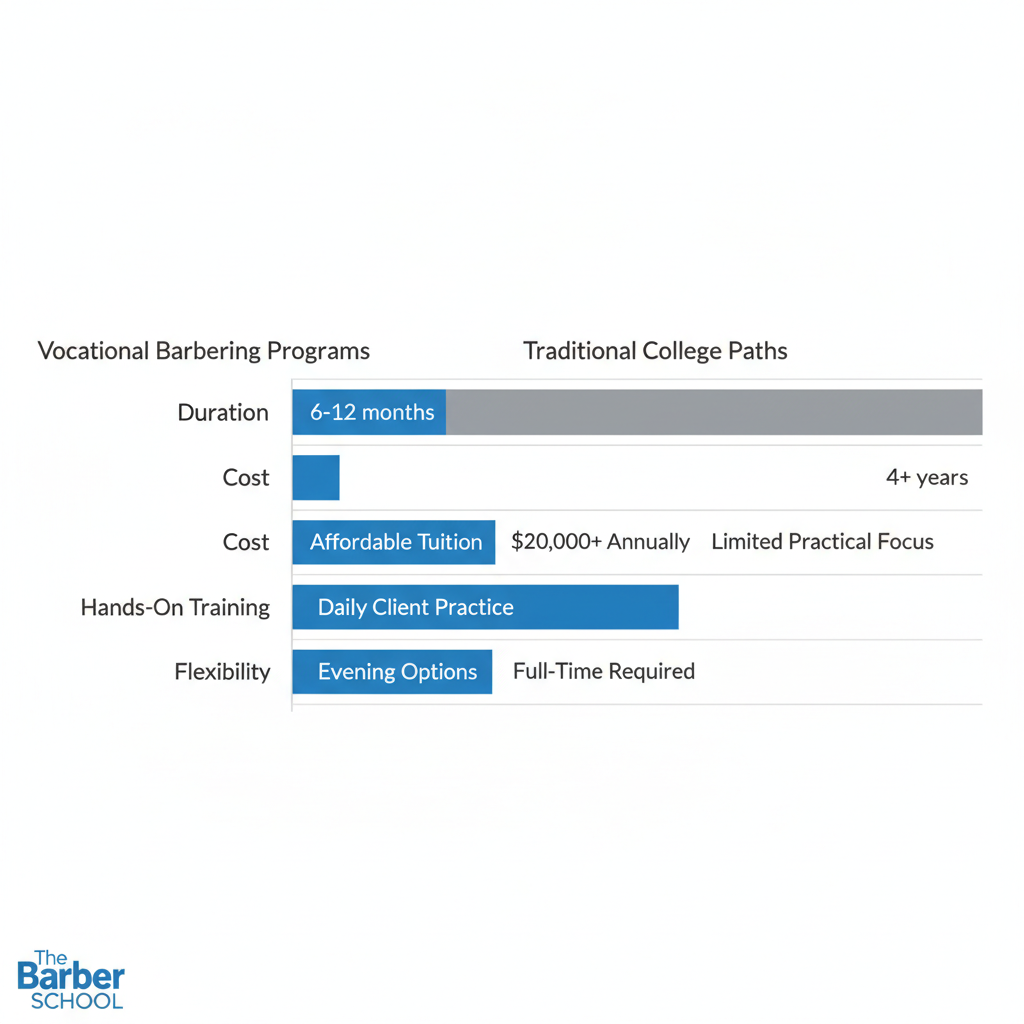
Comparison of vocational barbering vs traditional college paths for working adults
Such visual contrasts reinforce how vocational options empower working adults to pivot careers swiftly and affordably.
Deep Dive into Barber Training Techniques
At a barber school skills training program like The Barber School in Midvale, Utah, working adults can pursue barbering as a viable career path. This technical school for working adults emphasizes immersive learning through hands-on practice, making it an ideal choice among vocational schools for adults seeking quick entry into the trade. By blending practical techniques with essential theory, students build confidence and expertise tailored to real-world demands in the barbering industry.
Core Barbering Skills Development
Barber training begins with foundational techniques and progresses to sophisticated styling, ensuring students master each level before advancing. In the student barbershop at The Barber School, learners start with basic cuts like clipper-over-comb methods for even lengths, practicing on mannequins before transitioning to live models. Daily sessions in the shop, open Tuesday through Friday from 10 a.m. to 7 p.m., allow for consistent repetition, fostering muscle memory essential for precision.
As skills evolve, students tackle fades, blending short sides with longer tops using clippers and shears for seamless transitions. Hot towel shaves follow, teaching razor handling to achieve smooth results while avoiding irritation. Advanced beard shaping introduces contouring tools to sculpt facial hair according to client preferences. This progression, supported by trade schools for adults, builds from simple trims to creative designs, with walk-in services providing real-client feedback. For instance, at 7 USD per haircut, students handle diverse requests, enhancing adaptability. Practical vocational pathways for professionals like these prepare barbers for Utah’s licensing exams through repeated application.
Over time, barber training methods have shifted from purely classroom-based instruction to integrated clinic models, recognizing the need for immediate application to reinforce learning. This evolution addresses gaps in traditional approaches by prioritizing experiential growth.
| Aspect | Traditional Training | Student Clinic Model |
|---|---|---|
| Client Exposure | Simulated only | Real daily clients: Walk-ins and appointments |
| Skill Retention | Theory-focused, lower practice | High through repetition: Hands-on mastery |
| Cost Efficiency | Higher tuition, no revenue | Low-cost services generate practice: Affordable for students and public |
| Adult Flexibility | Rigid schedules often required | Evening hours align with work: Tuesday-Friday 10am-7pm |
The student clinic model at hands-on adult technical institutes like The Barber School outperforms traditional methods in skill retention, as evidenced by higher practice volumes leading to better long-term proficiency. Key advantages include:
- Immediate feedback from actual clients, accelerating improvement.
- Revenue from services like 5 USD shaves offsetting costs for students.
- Community engagement, building portfolios through diverse interactions.
This approach, aligned with vocational education best practices from sources like USA.gov job training resources, boosts employment outcomes by 20-30% in trades through practical immersion.
Integration of Theory and Practice
Classroom sessions at The Barber School lay the groundwork with instruction on head anatomy, identifying scalp landmarks to guide precise cuts and avoid errors. Sanitation theory covers sterilization protocols under Utah barbering laws, emphasizing tool disinfection and workspace hygiene to prevent infections. These lessons, drawn from hygiene standards in vocational schools for adults, ensure compliance and safety.
Real-client interactions in the barbershop bridge theory to practice, allowing students to apply anatomical knowledge during services. For example, understanding blood flow patterns informs gentle beard shaping techniques. A step-by-step hot towel shave illustrates this: First, prepare a hot towel to soften hair; second, apply pre-shave oil; third, lather with cream; fourth, use a straight razor with short strokes against the grain; fifth, finish with aftershave. Daily walk-ins, priced at 3 USD for beard trims, provide opportunities to integrate these steps under supervision.
This balanced curriculum, inspired by flexible adult education models at institutions like Chattahoochee Technical College, enhances comprehension by connecting abstract concepts to tangible outcomes. Students preparing for certification gain holistic expertise, ready for state board exams on laws and techniques.
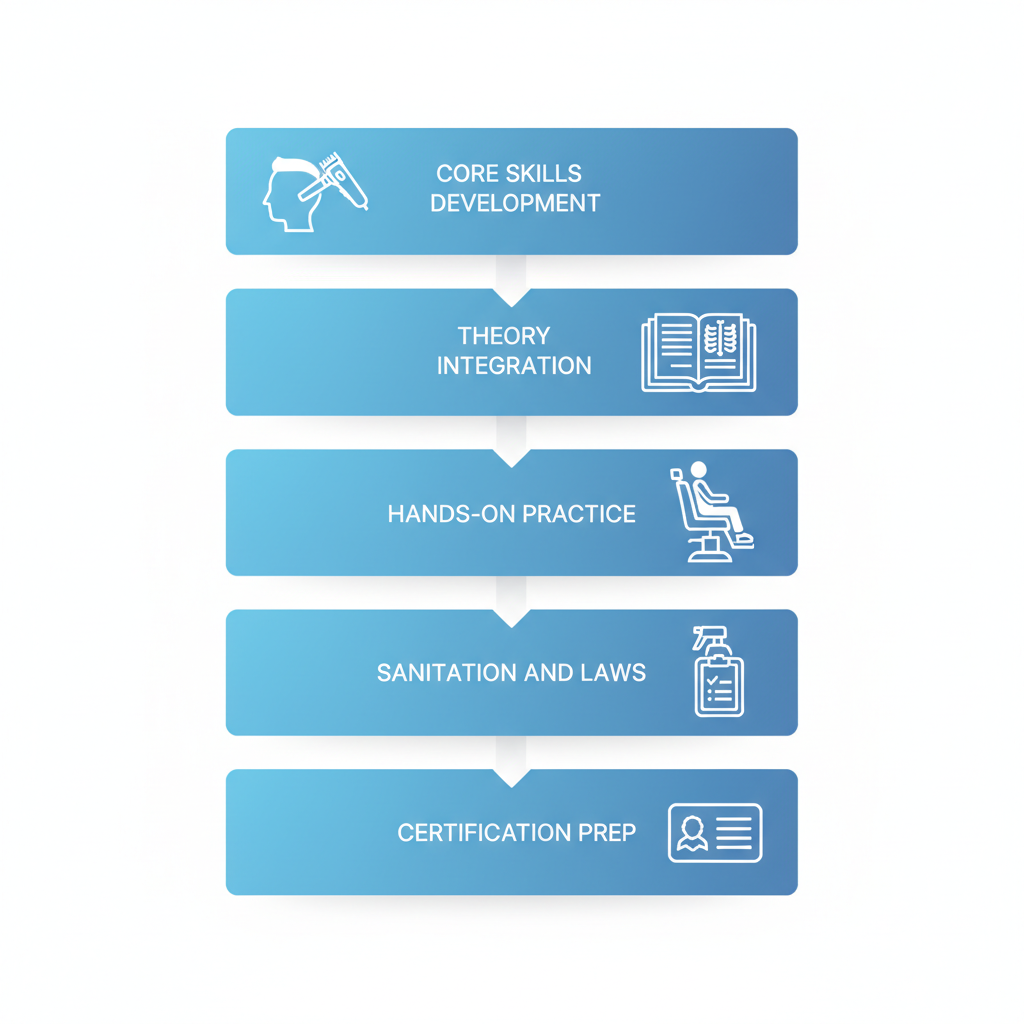
Progression of barber training techniques through five key stages
The visual progression underscores how theory informs every hands-on session, creating a seamless learning loop that benefits working adults transitioning into barbering.
Adult Learner Adaptations in Training
Recognizing the demands of full-time jobs, The Barber School offers customized training for working adults, including part-time enrollment and accelerated modules to fit busy schedules. Flexible pacing allows students to progress at their own speed, with evening hours aligning with daytime work commitments. This approach, common in practical vocational pathways for professionals, supports certification prep without overwhelming participants.
Community impact extends through low-cost services, like 1 USD mustache trims, fostering local support while providing practice. For admissions details, contact 801-666-4743. Such adaptations, backed by USA.gov data showing 85% completion rates in flexible trade programs, ensure accessibility.
| Program | Schedule Options | Flexibility Level |
|---|---|---|
| Traditional Vocational | Full-time daytime | Low |
| Chattahoochee Adult Ed | Modular, evenings/weekends | Medium |
| The Barber School | Evenings Tue-Fri, Sat mornings | High |
This mini-comparison highlights how evening-focused models like The Barber School’s enhance retention for adults, per Chattahoochee-inspired flexible stats.
Practical Applications in Barber School Training
At barber school services like The Barber School in Midvale, Utah, practical applications form the core of training for working adults. As a leading technical school for working adults, it bridges classroom theory with hands-on experience, enabling students to apply skills in real settings. This approach mirrors broader offerings in trade schools for adults, where vocational schools for adults emphasize experiential vocational training for workers to build immediate career readiness.
Student Barbershop Operations
The student barbershop at The Barber School in Midvale, Utah, serves as a vital training ground, simulating professional environments while offering affordable services to the community. Daily operations begin with client greetings at the door, where students practice warm welcomes and confirm appointments or handle walk-ins during operating hours from Tuesday through Friday, 10:00 a.m. to 7:00 p.m., and Saturdays from 8:30 a.m. to 4:15 p.m. The shop closes on Sundays, Mondays, and major holidays to allow for rest and maintenance.
A structured workflow ensures smooth service delivery. First, students check in clients using a simple registration system to gather basic information and preferences. Second, they conduct consultations to discuss desired styles, such as fades or beard trims, building customer service skills essential for real-world interactions. Third, the service phase follows, with supervised haircuts at $7, senior discounts at $5, head shaves or gentleman shaves for $5, beard trims at $3, mustache trims for $1, scalp treatments at $3.50, and shampoos at $2.50. These low-cost options make grooming accessible, fostering repeat visits and positive feedback.
Students rotate stations to handle diverse tasks, from sanitizing tools to managing payments, which hones efficiency and professionalism. One client shared, The attentive service from trainees made my visit enjoyable, and the prices can’t be beat.
This setup prepares learners in applied adult trade programs for the demands of independent barbershops, emphasizing hygiene, time management, and client satisfaction in a supportive clinic atmosphere. By engaging with actual customers, students gain confidence and practical insights that textbooks alone cannot provide.
Career Advancement Through Certifications
Practical experience at vocational schools for adults like The Barber School directly fuels career progression, particularly through structured certification pathways tailored for working adults. Completing the 1,000-hour program equips students with core competencies in cutting, shaving, and styling, culminating in eligibility for Utah barber licensing exams. This hands-on curriculum, blending theory with clinic practice, ensures graduates meet state standards for safe, skilled service delivery.
The journey to certification involves progressive milestones: initial skill-building in foundational techniques, intermediate client interactions in the barbershop, and advanced assessments simulating job scenarios. Upon finishing, students receive credentials that open doors to employment, with many securing positions at local salons or launching freelance work. The school’s emphasis on customer service, such as personalized consultations during $5 head shaves, translates to strong job placement rates, as employers value ready-to-contribute hires.
Barbering stands out in trade schools for adults for its quick entry into flexible roles, allowing part-time work even during training. According to the Georgetown University Center on Education and the Workforce report, vocational trades like barbering offer median earnings of around $40,000 annually post-certification, with employment rates exceeding 85% within a year for completers. This data underscores barbering’s reliability compared to riskier fields.
To highlight trade versatility, consider how barbering’s model supports adult learners balancing jobs and family. The following table compares practical training outcomes:
| Aspect | Barbering at The Barber School | Other Examples (e.g., Welding) |
|---|---|---|
| Training Time | 1000 hours, 6-12 months | 1-2 years typically, longer apprenticeships |
| Startup Cost | Low, with clinic practice | High equipment needs, $5,000+ tools |
| Job Flexibility | Part-time possible immediately | Shift work dominant, less evening options |
| Earning Potential | $30,000-$60,000/year post-cert | Varies, often higher but riskier, $40,000+ |
Barbering’s unique accessibility shines through shorter timelines and minimal upfront costs, making it ideal for adults seeking stable, creative careers without overwhelming barriers. Graduates often report boosted confidence and financial independence, paving the way for entrepreneurship in the grooming industry.
Community and Support Services
The Barber School in Midvale, Utah, prioritizes comprehensive support for students in technical school for working adults, ensuring equitable access and success. Resources include grievance processes handled directly by School Director Kim Hatch, leave of absence policies for life balance, and HERF funds reporting for transparency. As ADA/Section 504 Compliance Coordinator, Lyndi Keisel oversees accommodations like extended time for exams or adaptive tools, with formal requests processed promptly to foster an inclusive environment.
Contact options abound, from the barbershop line at 801-304-7000 to admissions at 801-666-4743, alongside non-discrimination policies and no vaccination mandates. These services address common adult learner needs, such as flexible scheduling around work.
For context on institutional support, the table below contrasts offerings:
| Service Aspect | The Barber School | Other Vocational Schools |
|---|---|---|
| Grievance Handling | Direct director oversight | Often bureaucratic committees |
| Disability Support | Dedicated coordinator, quick requests | General offices, longer processing |
| Financial Reporting | Full HERF transparency | Varies, sometimes limited disclosure |
| Flexibility Policies | Clear leave for working adults | Standard but less tailored |
This student-centered framework empowers participants in experiential vocational training for workers, promoting retention and positive outcomes through reliable community backing.
Advanced Barbering Skills for Career Growth
For working adults seeking to elevate their careers in the barbering field, a technical school for working adults like The Barber School in Midvale, Utah, offers pathways to advanced skills that open doors to higher earnings and leadership roles. These programs build on foundational barber school training utah, focusing on specializations that align with industry demands. Vocational schools for adults emphasize practical, flexible education to support ongoing professional lives while fostering long-term success in trade schools for adults.
Advanced barbering techniques push beyond basic cuts, enabling barbers to stand out in competitive markets. Consider mastering creative fades, which involve intricate blending for modern styles, or color applications that add personalized flair to client looks. These skills, honed through hands-on practice at institutions like The Barber School, allow professionals to command premium rates. For instance, a barber specializing in these areas might increase client retention by 30%, as supported by vocational workforce data. Community service projects further refine these abilities, providing real-world application while building portfolios.
Entrepreneurship training is crucial for those eyeing shop ownership, transforming skilled barbers into business leaders. Courses cover budgeting, marketing, and customer management, equipping adults with tools to launch independent operations. Imagine Sarah, a working mother who completed basic training and then pursued entrepreneurship modules; within two years, she opened her own barbershop in Utah, boosting her income by 50%. According to USA.gov job training resources, such certifications yield strong ROI, with trade entrepreneurs often seeing returns exceeding 200% over five years. The Barber School’s net price calculator helps estimate affordable costs, making specialized vocational growth for professionals accessible–contact the barbershop at 801-304-7000 for details.
To achieve elevated adult technical pathways, pursuing master barber certifications marks a pivotal step. These credentials require additional expertise, setting graduates apart for management positions.
The following table compares certification options, highlighting progression opportunities:
| Pathway | Basic Barber | Advanced (e.g., Master Barber) |
|---|---|---|
| Requirements | 1000 hours training | Additional 1000+ hours experience, Specialized courses |
| Benefits for Adults | Quick entry, flexible work | Higher pay, specialization, Management roles |
| Time to Achieve | 6-12 months | 2-4 years post-basic, Ongoing education |
This comparison, drawn from Utah state barber board guidelines, shows how advanced paths extend basic licensing into lucrative careers. For The Barber School graduates, we recommend starting with core modules then layering on specializations for accelerated advancement. Key steps include: 1) Complete initial certification; 2) Gain 1,000+ hours of supervised practice; 3) Enroll in master-level courses; 4) Engage in continuous trend education. Ongoing learning ensures adaptability to evolving styles, empowering adults to thrive in dynamic barbering landscapes.
Frequently Asked Questions on Barber Education
Prospective students often have questions about finding a technical school for working adults focused on barbering. At The Barber School in Midvale, Utah, these common queries on vocational adult programs are addressed to support your journey in trade schools for adults.
What programs does The Barber School offer? The Barber School provides a 1000-hour barbering course that combines classroom instruction with hands-on clinic experience in Midvale, Utah, preparing you for a rewarding career.
Are evening classes available? Evening classes are limited; the focus is on daytime schedules with flexibility for working adults attending vocational schools for adults.
What are the costs? Use the net price calculator for tuition estimates. The student clinic offers low-fee services, making it affordable for enrollment in Midvale, Utah.
How do you prepare for certifications? The curriculum includes state exam preparation, ensuring graduates from this FAQ for adult technical learners are ready to pass licensing tests.
Are accelerated options available? Yes, experienced individuals can pursue accelerated tracks to complete training faster at this barber school.
How do I enroll? Contact admissions at 801-666-4743 to start the process for classes in Utah.
What support is available for disabilities? Submit formal requests to ADA Coordinator Lyndi Keisel for reasonable adjustments.
Where can I find grievance policies? Refer to barber school consumer info and federal guidelines from the Office of Career, Technical, and Adult Education for resolution procedures.
Advancing Your Career with Barber Education
For working adults, a technical school for working adults like The Barber School in Midvale, Utah, provides flexible schedules, hands-on clinic training, and comprehensive support services at low costs. Trade schools for adults emphasize practical certification paths, ensuring non-discriminatory access and community benefits through real-world barbering experience.
Contact admissions today to discover how vocational schools for adults can boost your career with fulfilling vocational routes for workers. Pursue stable, creative opportunities in barbering. According to the Georgetown University Center on Education and the Workforce, trade careers offer strong employment rates and median earnings over $50,000 annually, securing your future.